Train predictive models
on your data
Build quantitative structure-activity and structure-property relationships tuned to your specific chemical space. Train models on your assay, your catalysts, your materials, your molecules.
Custom model training & validation
Train models directly on your assay results, reaction outcomes, or property measurements. Choose from diverse models, hyperparameters, and validation approaches.
Feature analysis & selection
Run correlation analysis to find and remove redundant features, then refine with recursive feature elimination to surface features that matter.
Deploy your models to make predictions
Compare trained models and deploy them to score new candidate structures or experiments.
Mechanistic insights
Gain actionable chemical knowledge by interrogating models with feature importance calculations.
See it in action
From data to predictions in four steps
Upload your data, train models, validate performance, and predict on new molecules — all from the browser.
Upload
Load your training data
Upload a CSV with molecular descriptors (or SMILES) and your measured property. The platform auto-detects columns, flags missing values, and lets you pick the target variable.
Training Data Preview
7 columns · 64 rows in loaded preview
| row | smiles | MaxAbsEState | MaxEState | MinAbsEState | qed | SPS | pIC50 |
|---|---|---|---|---|---|---|---|
| 1 | O1CC(C@@H)N… | 0.731 | 0.731 | 0.088 | 0.619 | 0.274 | — |
| 2 | Fc1cc(c(F)(C… | 0.867 | 0.867 | 0.029 | 0.219 | 0.399 | — |
| 3 | S1(=O)(=O)N… | 0.816 | 0.816 | 0.014 | 0.365 | 0.177 | — |
Y pIC50·X 187 features·Excluded 6
Analyze
Surface the features that matter
Compute Spearman correlations against your target, flag redundant descriptor pairs, and rank features by permutation importance.
187 features analyzed · 6 highly correlated pairs flagged
12 selected →Train
Train, validate, and compare
Train models directly on your assay results, reaction outcomes, or property measurements. Choose from diverse models, hyperparameters, and validation approaches.
Model
Random Forest
Features
Auto · 10
Split
K-Fold (5)
HP Tuning
Auto Tune
| Metric | Best Train | Best Test | Avg Test |
|---|---|---|---|
| R² | 0.81 | 0.68 | 0.63 |
| Adj-R² | 0.77 | 0.13 | -0.00 |
| MSE | 0.33 | 0.62 | 0.64 |
| MAE | 0.44 | 0.62 | 0.62 |
Predict
Score new compounds instantly
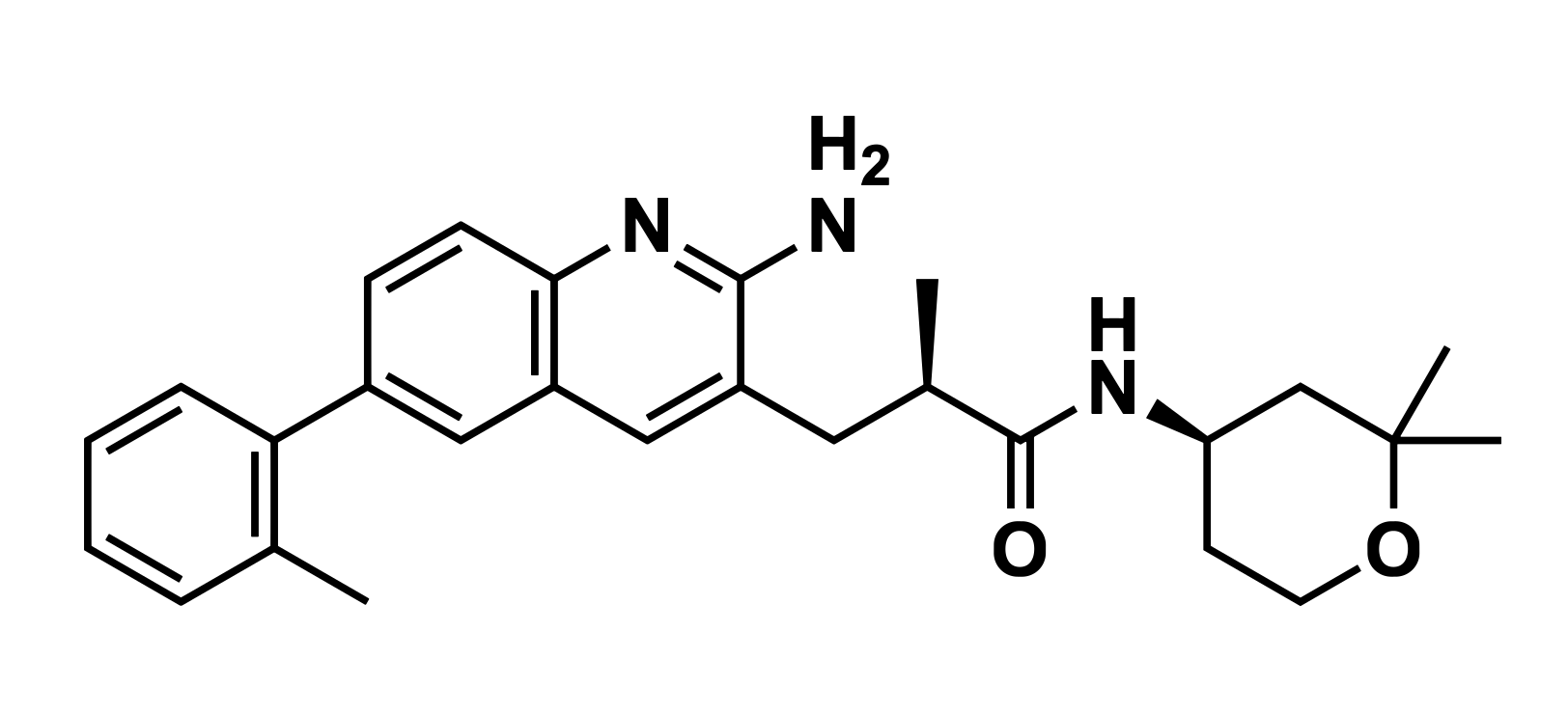
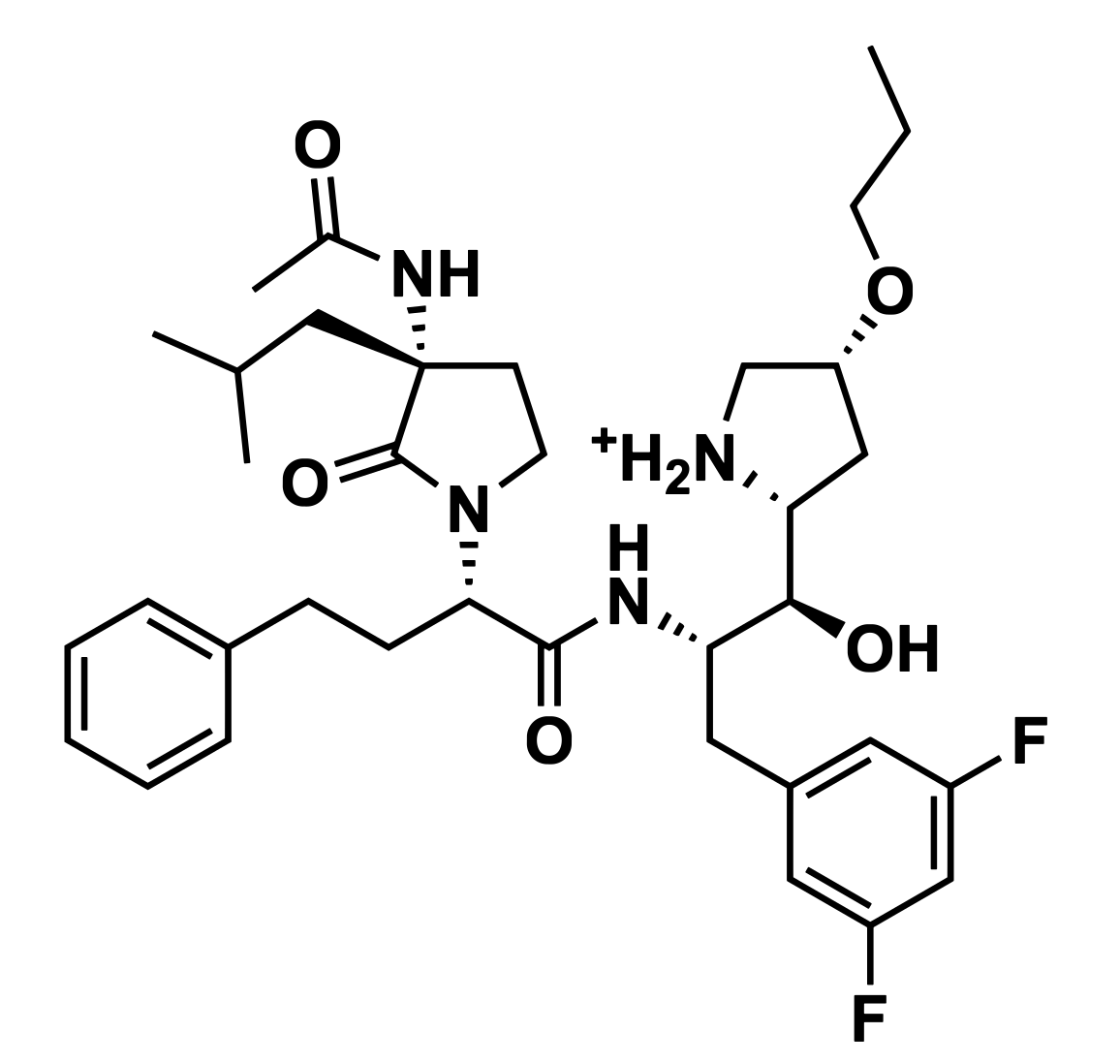
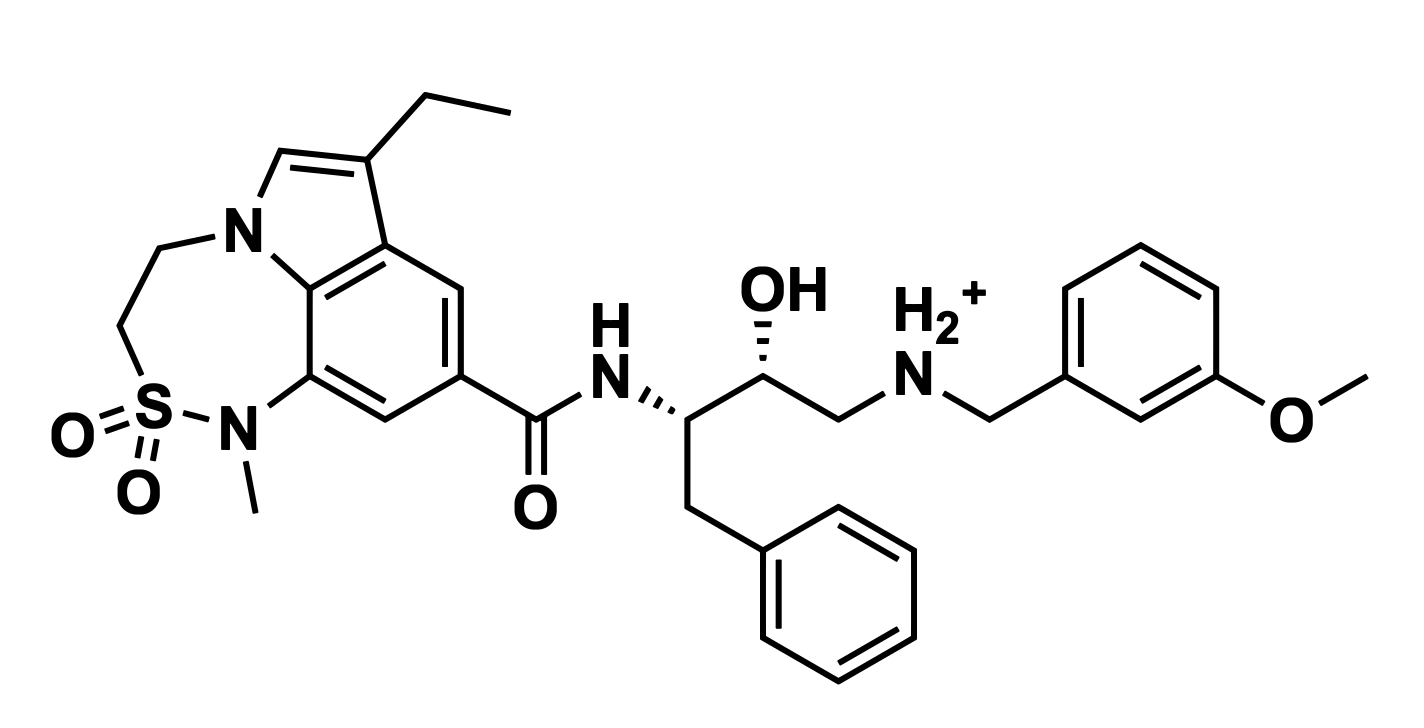
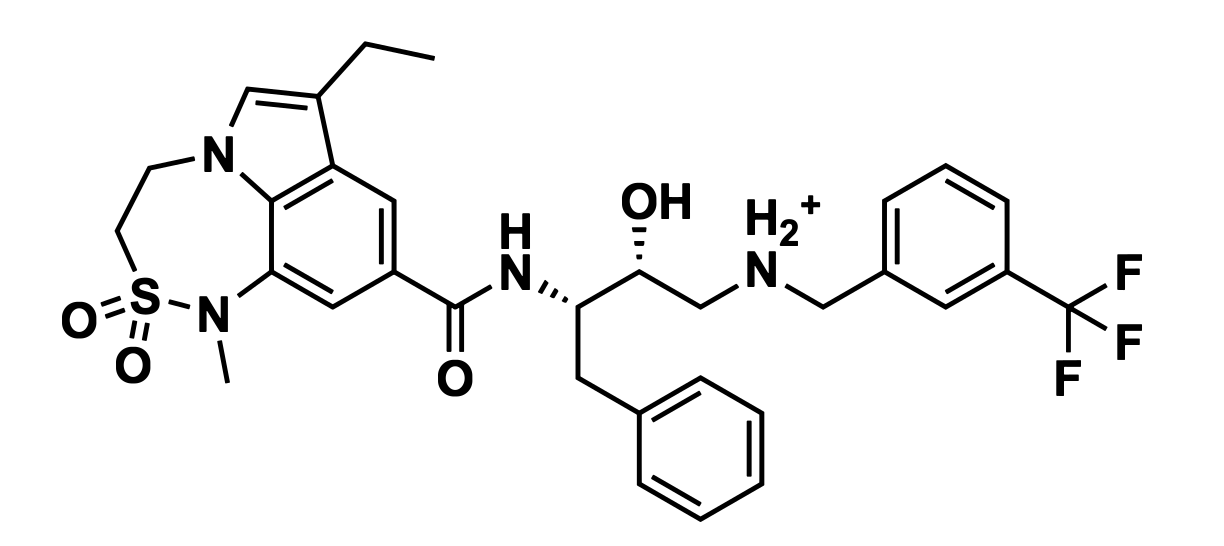
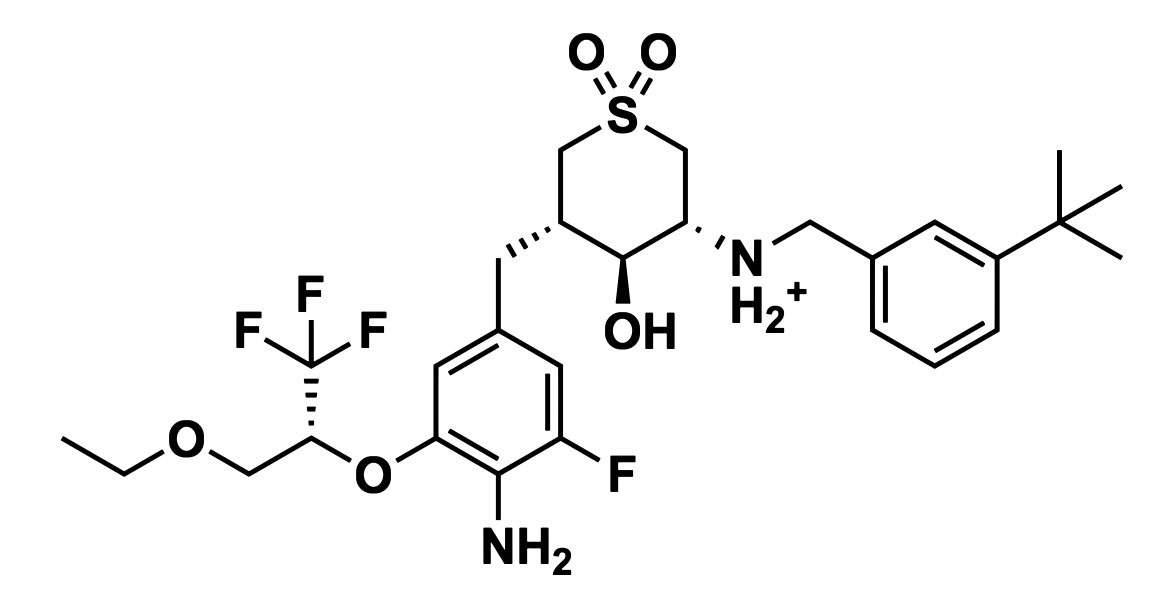
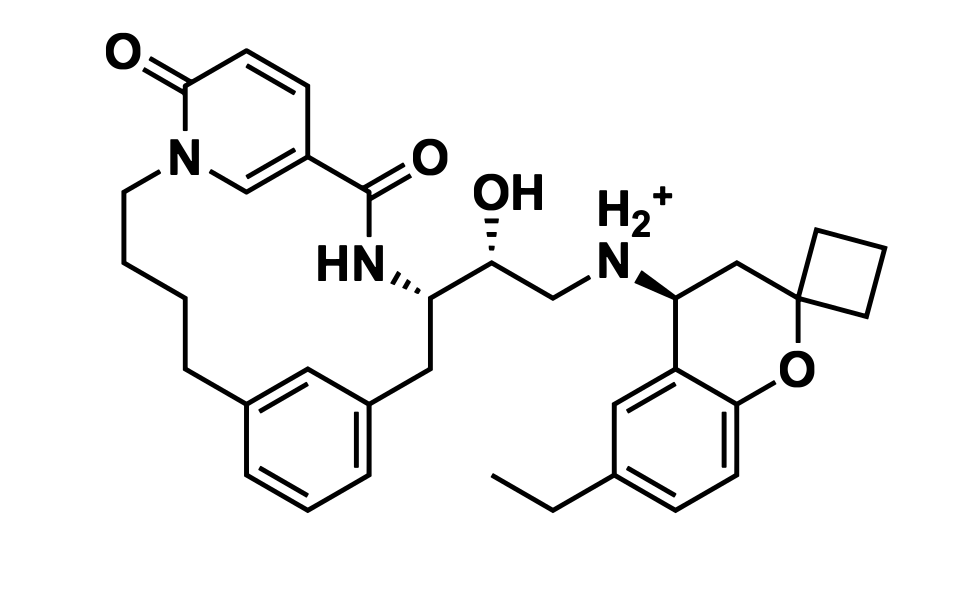
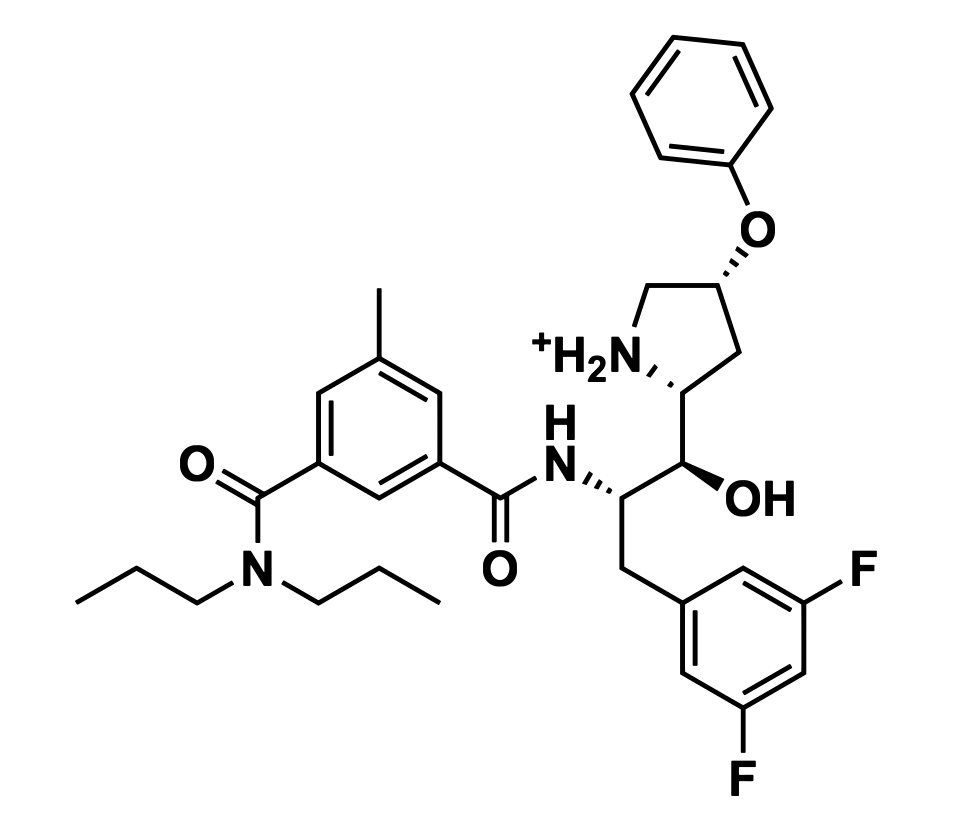
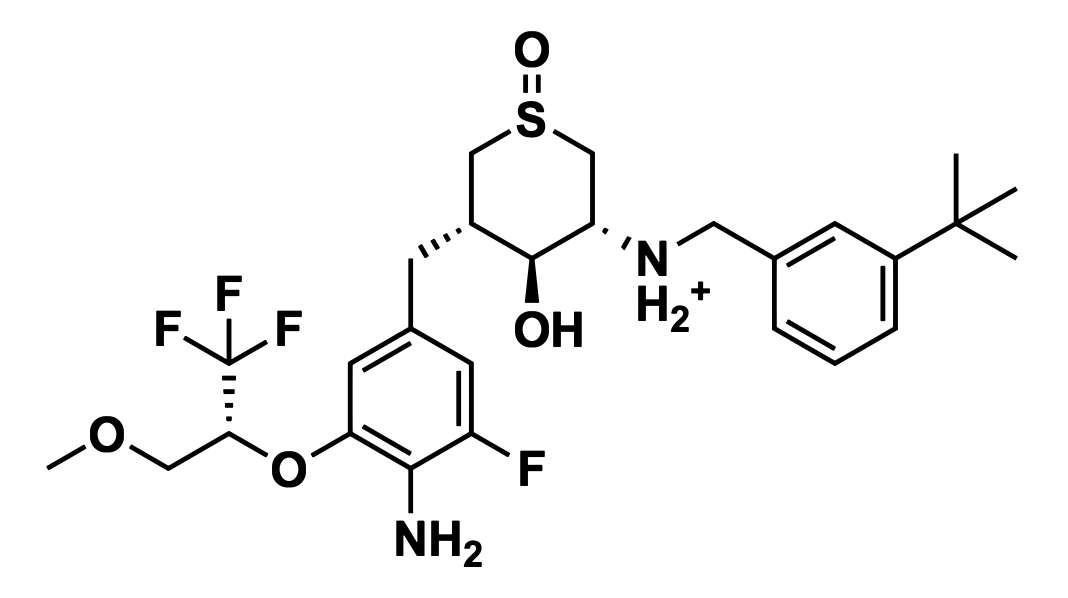
Upload inference file with candidate structures. The platform performs inference with your trained model and computes predicted properties for your unseen molecules.
Applications
Predict before you synthesize
Drug Discovery & ADMET
Predict pIC50, EC50, solubility, permeability, metabolic stability, and other biological or ADMET endpoints. Prioritize which candidates to synthesize and flag compounds with unfavorable properties early.
Materials Property Prediction
Predict Tg, tensile strength, HOMO-LUMO gap, and other target properties from molecular or polymer descriptors. Design novel materials with ML-guided optimization of synthesis conditions.
Reaction Outcome Prediction
Train on reaction descriptors and experimental conditions to predict yield, selectivity, and more. Identify which molecules to test next before going to the bench.
Ready to build your first model?
Upload your data, train a custom model, and start predicting — all in minutes.