The AI
Platform
For Chemists
Find optimal conditions faster, select candidate structures with predictive models, and understand the chemistry driving your results.
Partners at leading institutions






Partners at leading institutions
Features
Discover what our platform can do for you
Machine learning guided process optimization
Accelerate your entire process optimization pipeline.
Everything you need to accelerate discovery and optimization
From molecular design to experiment optimization — a unified platform for machine learning in chemistry.
Plan Routes to Novel Molecules
Get multiple ranked routes to a target no one has made yet, each step with reagents, conditions, and a written procedure, screened against the patent literature and priced from suppliers worldwide.
- 1SNArDMSO (or NMP/MeCN), 60–80 °C, 4–16 h, N2; selective mono-substitution at C-5
- 2Reductive amination1,2-Dichloroethane (or DCM), 0 °C → rt, 12–18 h, N2, then aq. NaHCO3 quench
- 3Nitro reductionMeOH/EtOAc (1:1), H2 (1 atm, balloon), rt, 3-16 h, then Celite filtration
- 4Buchwald–Hartwig amination1,4-Dioxane (degassed), 100 °C, 12–16 h, N2 (sealed vial; or microwave 120 °C, 1–2 h)
- 5Boc deprotectionDCM/1,4-dioxane, 0 °C to rt, 1-4 h, N2 (or air); concentrate and triturate with Et2O
- 6Amide couplingDMF, 0 °C → rt, 4–16 h, N₂
- 7Buchwald–Hartwig amination1,4-dioxane (degassed), 90–100 °C, 3–16 h, N₂ atmosphere, sealed vial
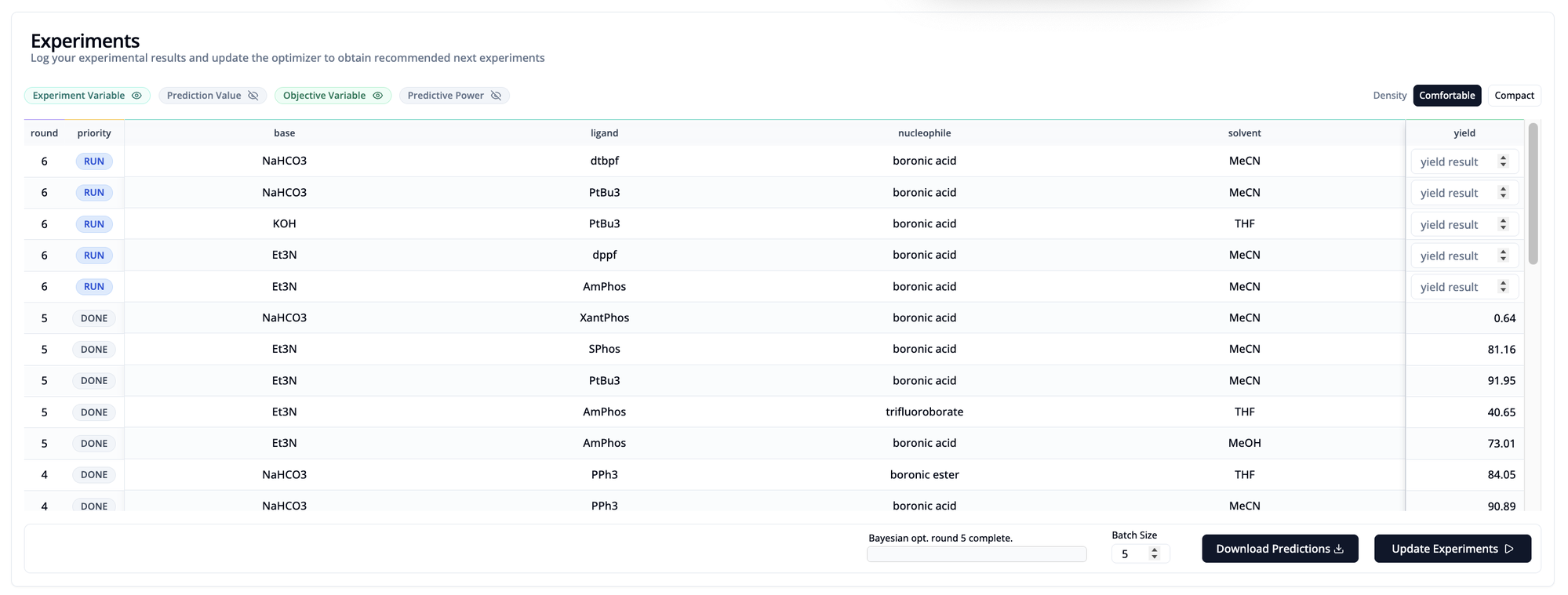
Iteratively Optimize Experiments
Log experimental results, run AI-guided optimization rounds, and receive experimental recommendations.
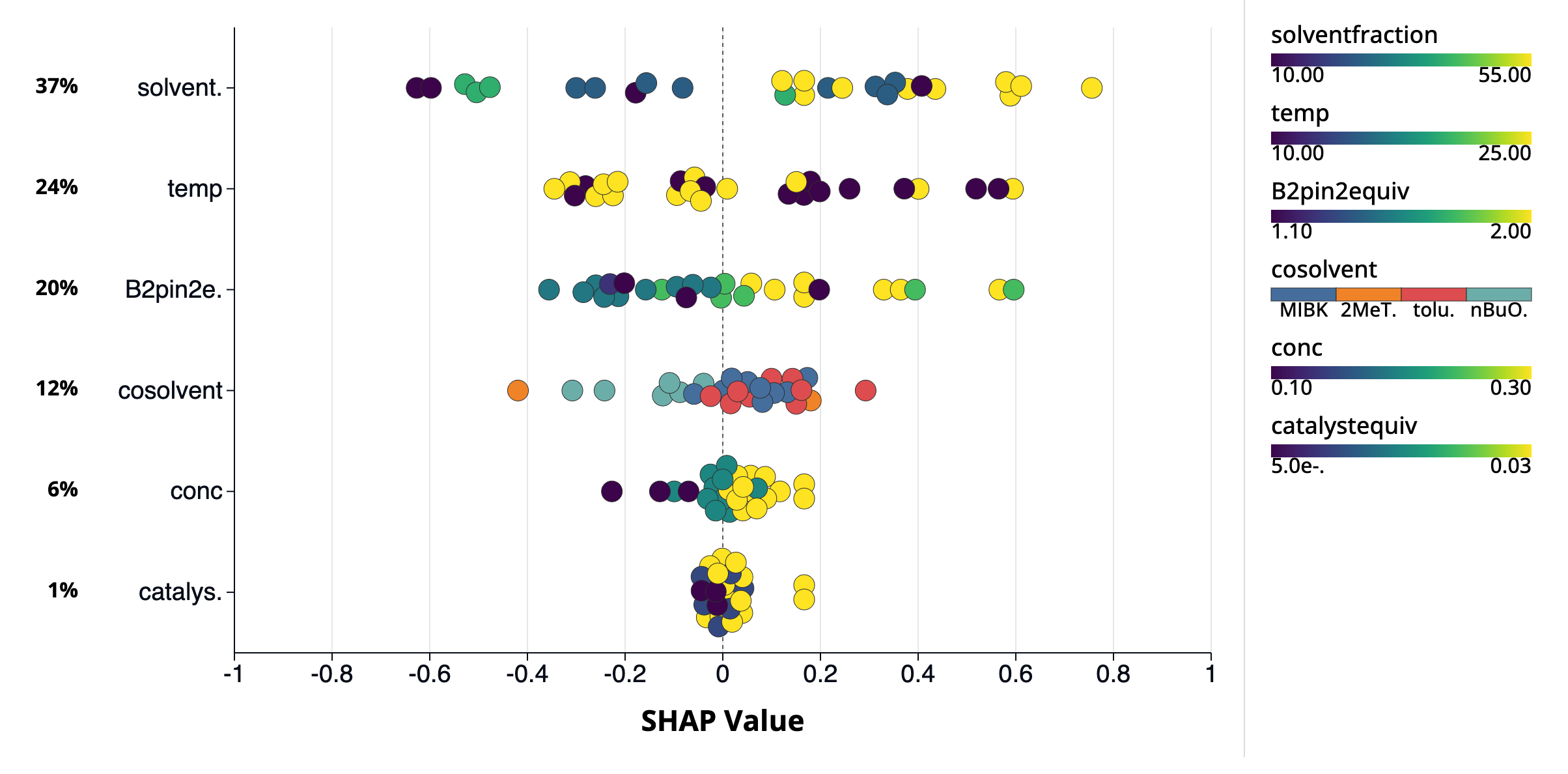
SHAP Analysis
Understand which features drive your model predictions with interactive SHAP value beeswarm plots.
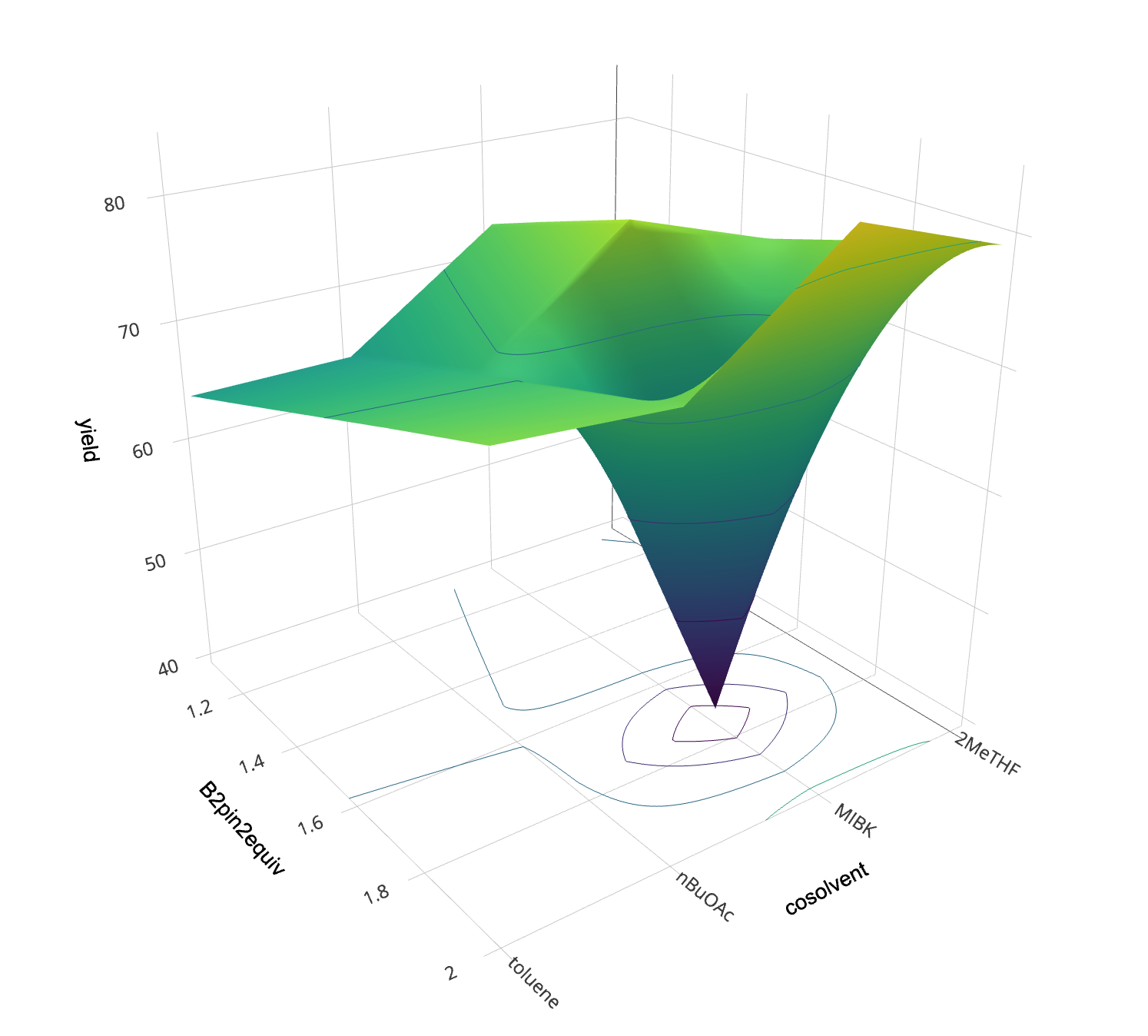
Multi-Dimensional Optimization
AI models navigate high-dimensional parameter spaces, learning from each experiment to converge on optimal conditions faster.
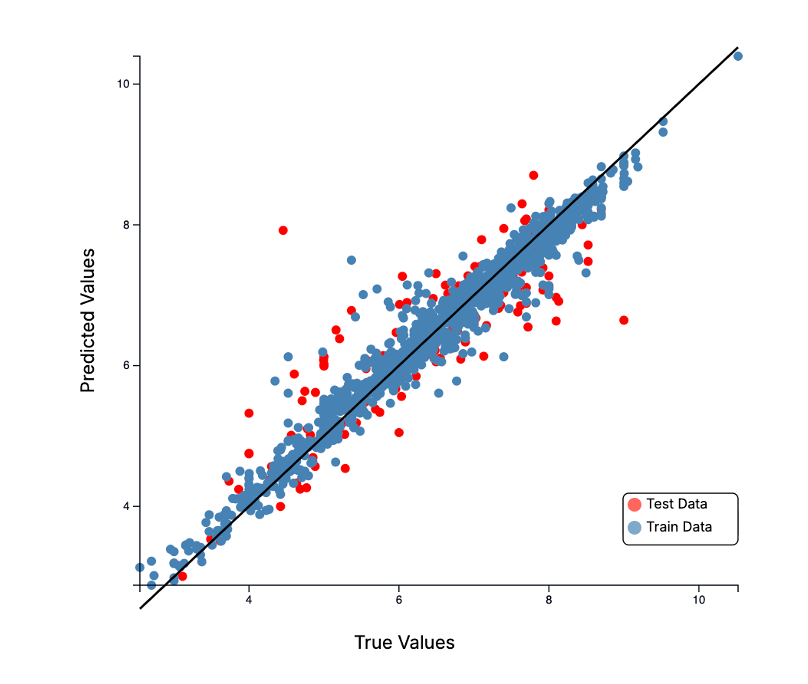
Molecular Property Prediction
Predict molecular properties with custom ML models trained on your data for maximum relevance to your chemical space.
Atom Label Editor
Label atoms and bonds to calculate site-specific descriptors like bond angles, dihedrals, and atom-level electronic properties. Auto-assign consistent labels across your library with our common-substructure algorithm.
DFT, Automated and GPU Accelerated
A fully automated, GPU-accelerated pipeline handles conformer searching, geometry optimization, electronic structure calculations, and descriptor extraction to yield high-quality descriptors ready for model training.
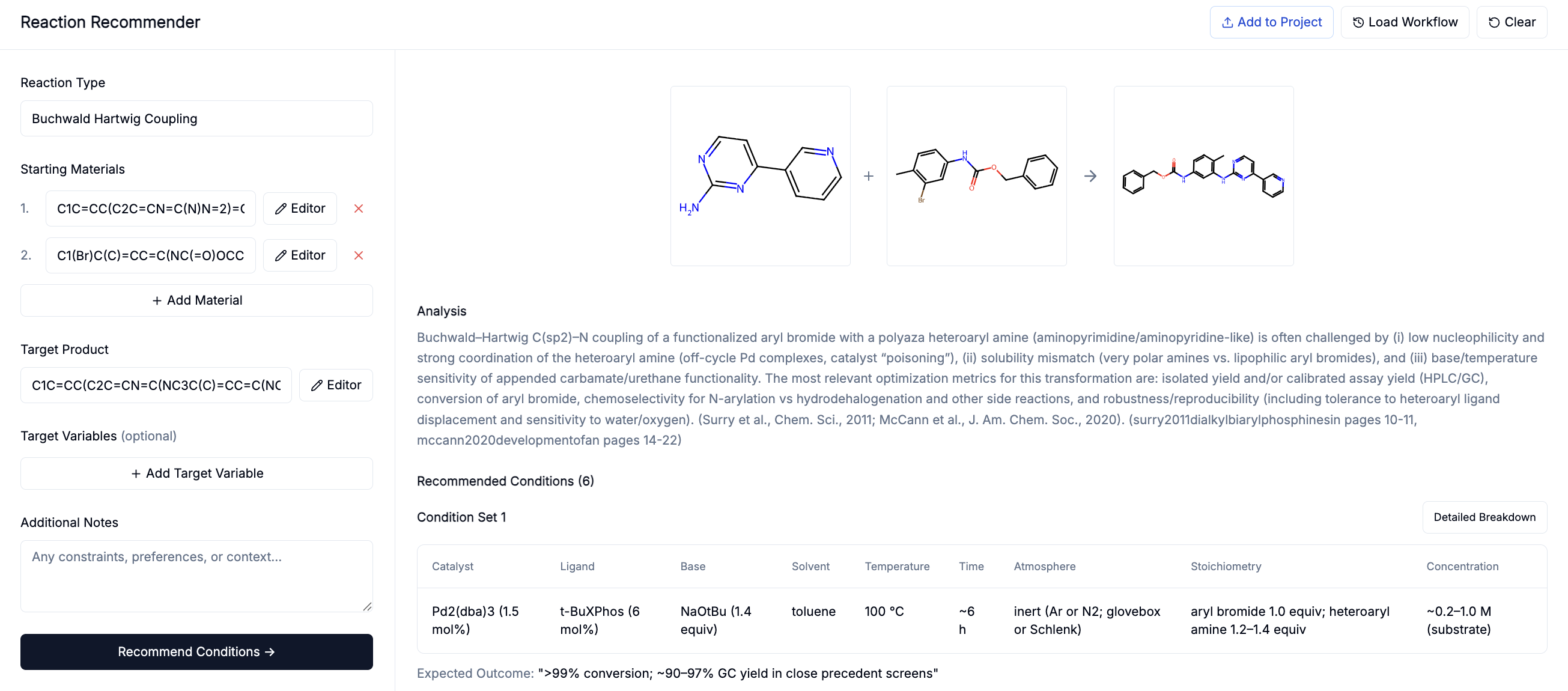
Reaction Recommender
Input starting materials and target products, then get AI-recommended catalysts, ligands, solvents, and conditions backed by literature.
Built for every stage of R&D
From academic research to industrial manufacturing — one platform that adapts to how you work.
CROs & CDMOs
- Accelerate molecule delivery timelines
- AI-driven synthesis route optimization
- Win more contracts with faster results
Process Chemists
- Find optimal conditions faster than DoE
- AI literature analysis for starting conditions
- Predict untested catalyst and reagent activity
Medicinal Chemists
- Predict activity and ADMET across candidate libraries
- Identify trends driving your target with interpretable models
- Filter libraries with dimensionality reduction and clustering
Academic Researchers
- Automated DFT workflows for high-fidelity descriptors
- Build predictive models from computed features
- Optimize and discover new chemistry
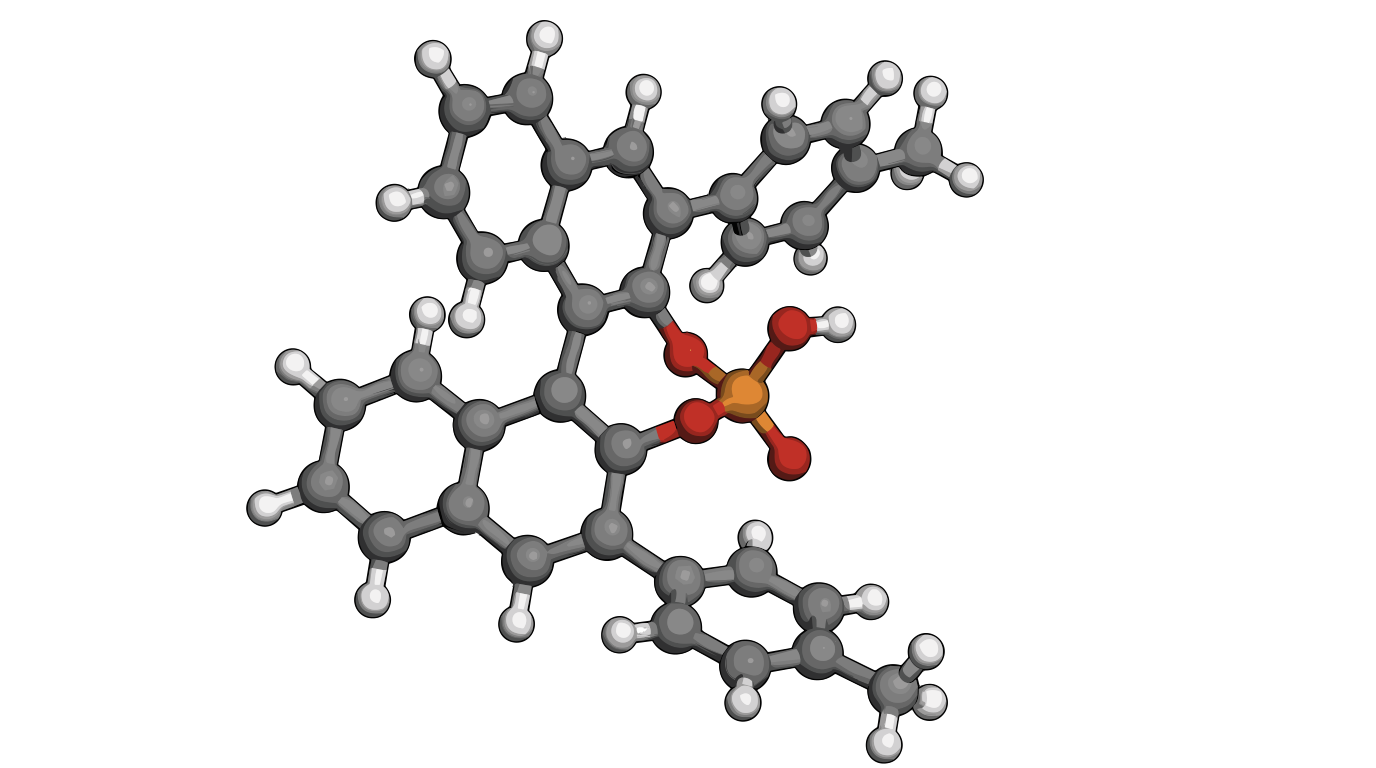
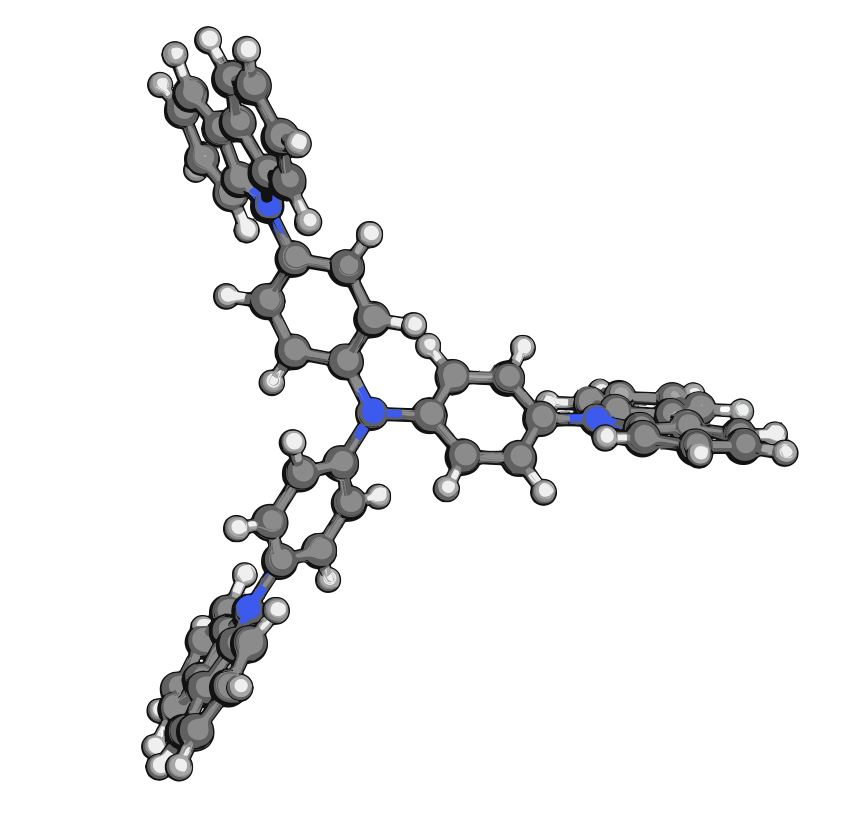
Materials Scientists
- Predict HOMO–LUMO gaps, Tg, tensile strength, charge-transport properties, and more
- Design novel materials from structural polymers to OLED emitters
- Optimize the synthesis of materials with target properties
Teachers
- Already launched in undergraduate chemistry curricula
- Hands-on AI/ML and chemistry experience for students
- Ready-made workflows for coursework and labs
CROs & CDMOs
- Accelerate molecule delivery timelines
- AI-driven synthesis route optimization
- Win more contracts with faster results
Process Chemists
- Find optimal conditions faster than DoE
- AI literature analysis for starting conditions
- Predict untested catalyst and reagent activity
Medicinal Chemists
- Predict activity and ADMET across candidate libraries
- Identify trends driving your target with interpretable models
- Filter libraries with dimensionality reduction and clustering
Academic Researchers
- Automated DFT workflows for high-fidelity descriptors
- Build predictive models from computed features
- Optimize and discover new chemistry
Materials Scientists
- Predict HOMO–LUMO gaps, Tg, tensile strength, charge-transport properties, and more
- Design novel materials from structural polymers to OLED emitters
- Optimize the synthesis of materials with target properties
Teachers
- Already launched in undergraduate chemistry curricula
- Hands-on AI/ML and chemistry experience for students
- Ready-made workflows for coursework and labs